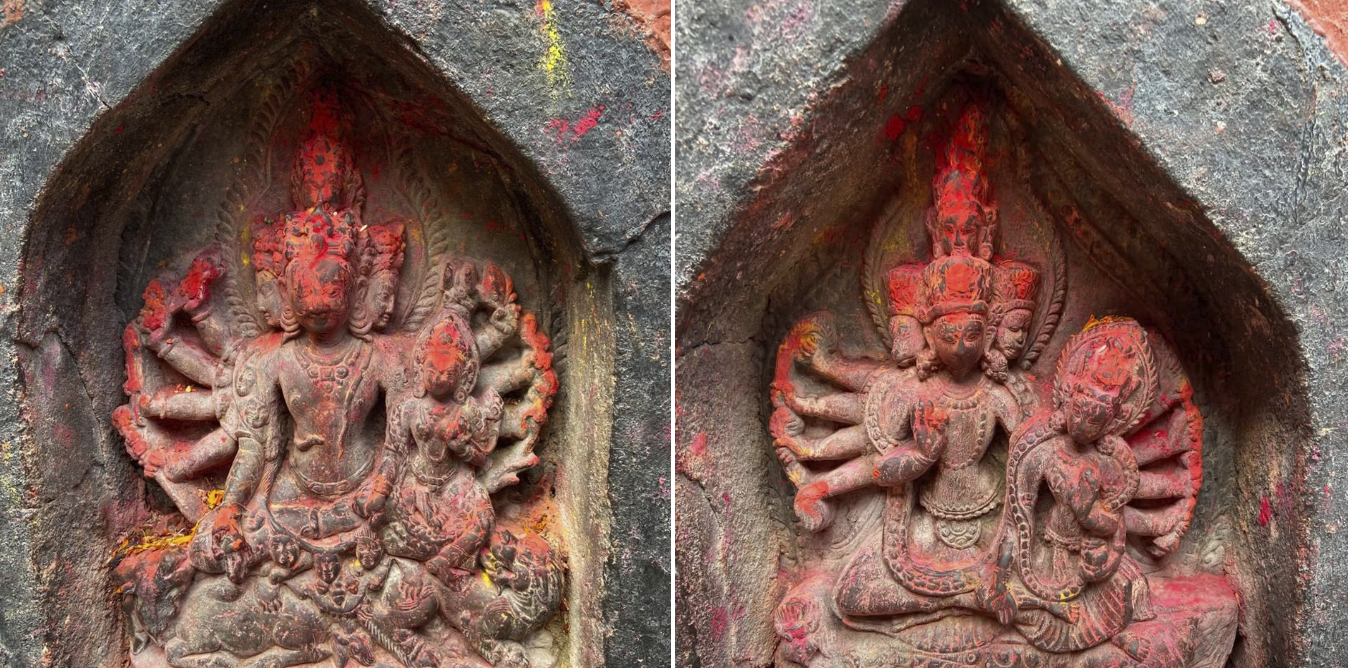
Tucked quietly in a corner of the Guyeshwari Temple in Kathmandu are two remarkable twin-like sculptures placed side by side, so precisely aligned that they appear as counterparts. One depicts a 𝐭𝐞𝐧-𝐚𝐫𝐦𝐞𝐝, 𝐟𝐢𝐯𝐞-𝐡𝐞𝐚𝐝𝐞𝐝 𝐏𝐚𝐧𝐜𝐡𝐚-𝐕𝐚𝐤𝐭𝐫𝐚 Ś𝐢𝐯𝐚 with his consort and mounts, while the other, directly beside him, shows an equally powerful 𝐭𝐞𝐧-𝐚𝐫𝐦𝐞𝐝, 𝐟𝐢𝐯𝐞-𝐡𝐞𝐚𝐝𝐞𝐝 𝐏𝐚𝐧𝐜𝐡𝐚-𝐕𝐚𝐤𝐭𝐫𝐚 𝐕𝐢ṣṇ𝐮, seated on Garuḍa with Lakṣmī on a tortoise below.
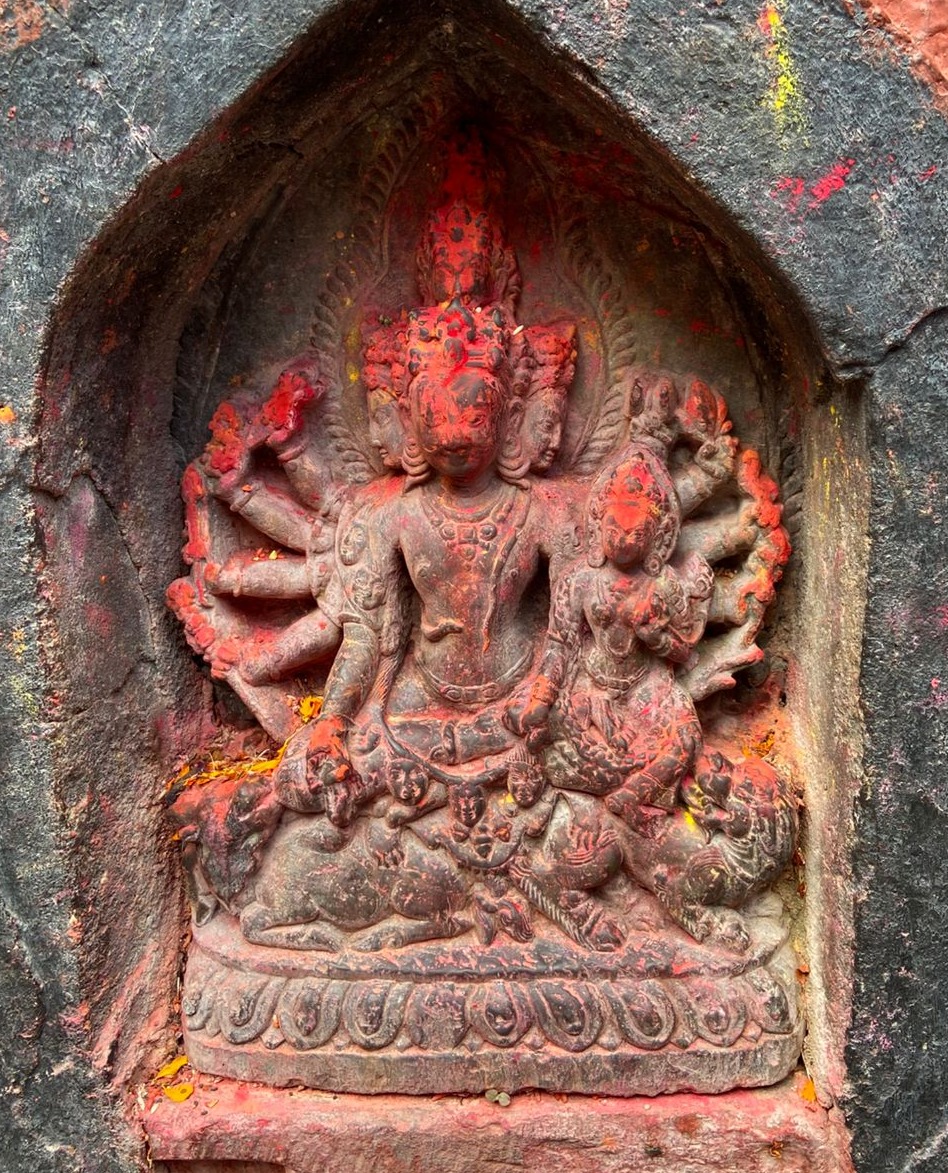
Their striking formal symmetry feels like more than just an artistic choice; it seems to reflect a shared ritual imagination shaped by early tantric theology.
In the Aṣṭādaśavidhāna, a rare Vaiṣṇava ritual manual preserved in a 12th-century Nepalese manuscript and edited by Diwakar Acharya, Viṣṇu is invoked through a sequence of five brahma-mantras. These mantras are explicitly described as “śaiva-brahma-mantra-kalpena,” meaning they are formulated in the manner of the Śaiva brahma-mantras. Each mantra corresponds to one of Viṣṇu’s five heads, mirroring the Śaiva model in which each of Śiva’s faces carries a distinct mantra and cosmic function.
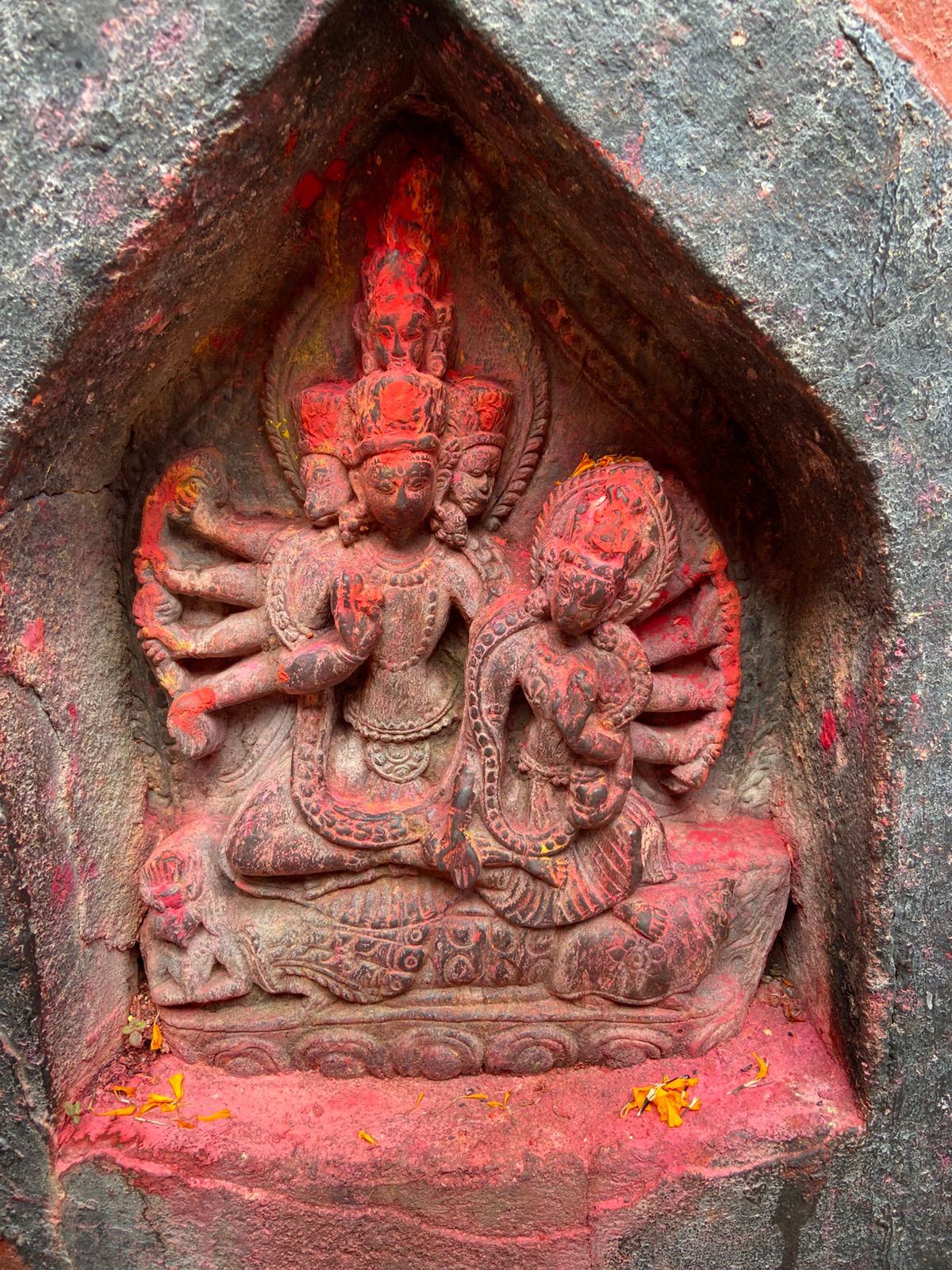
This is not imitation but adaptation, an intentional alignment that translates Śaiva metaphysical structure into a Vaiṣṇava ritual world. These two side-by-side icons silently bear witness to that shared tantric inheritance, where difference was not opposition but dialogue.
Sadly, however, the Viṣṇu statue has been poorly reconstructed. Its five faces are now barely recognizable, and the restoration lacks the artistic integrity of the original. This highlights an urgent need for greater care, expertise, and doctrinal understanding in our restoration efforts, before what remains is reshaped beyond recognition.